
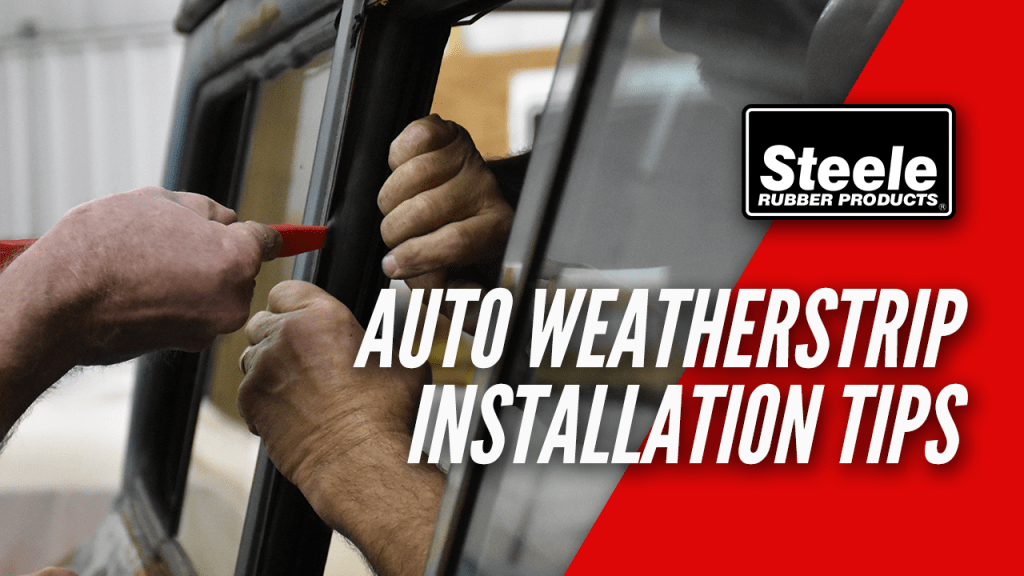
We make thousands of rubber parts at Steele Rubber Products but we rarely get to see them after they leave the shop. We visited with the guys at Quarter Mile Muscle in Mooresville, NC to watch them install our new door seals on a 1969 Camaro.
They did the doors and the trunk seals and addressed some important steps in applying weatherstrip. We outlined a few with photos for you to use when applying Steele Rubber Products Weatherstripping on your own restoration project.
Tip #1 — Align first, then pin, clip or glue
We recommend laying the rubber in place without glues, pins or clips first. If the part is incorrect or if you aren’t sure where to start, this test run will highlight any problems beforehand and save you the trouble of removing the weatherstrip. We’ve even used masking tape to help with this step.
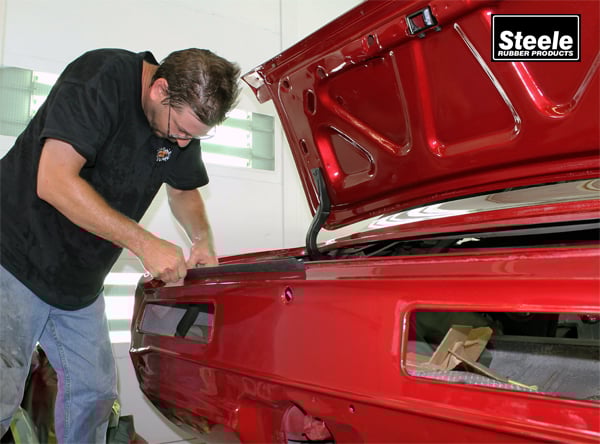
Tip #2 — Less glue is easier to clean-up and dries faster
Glue application is where most restorers make mistakes and it’s always messy. Weatherstrip adhesive is strong and thick, it only takes a little to get the job done. Apply your weatherstrip adhesive in thin beads and let it dry for a few seconds before setting the weatherstrip. We recommend working in 2-3 feet sections on one part of the vehicle to prevent an area from becoming too dry. For detailed instructions check out our post How to Glue Automotive Weatherstrip the Right Way.
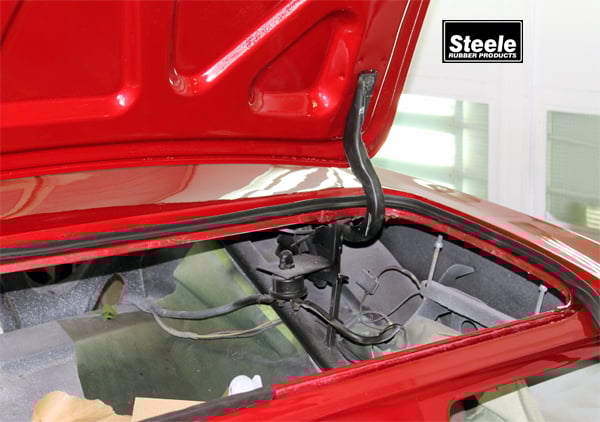
Tip #3 — Start in the lowest section
Start the application in the center of the lowest section where water will most likely gather before exiting the vehicle. This is the striker for the trunk or bottom-center for the inner door or windshield. Closing the seam in this area means any water in the seals or the vehicle will drain away and prevent rusting.
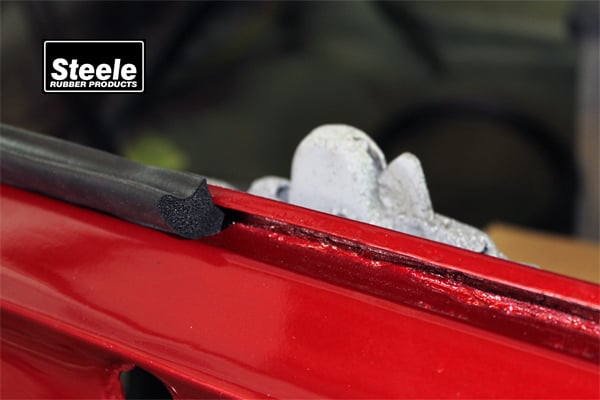
Molded ends are the exception to this rule. If the part has a molded end, start the installation by fitting the molded ends, after completing tip # 1.
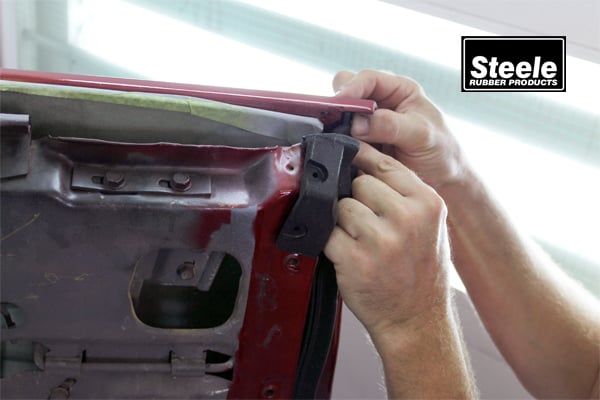
Tip #4 — Leave an excess 1/2 or 1/4 inch seal
Weatherstrip will shrink and flatten after setting. At the end of the installation trim the excess leaving an extra 1/4 inch or 1/2 inch overlap that will ensure that you have a perfect seal as the rubber flattens into place.
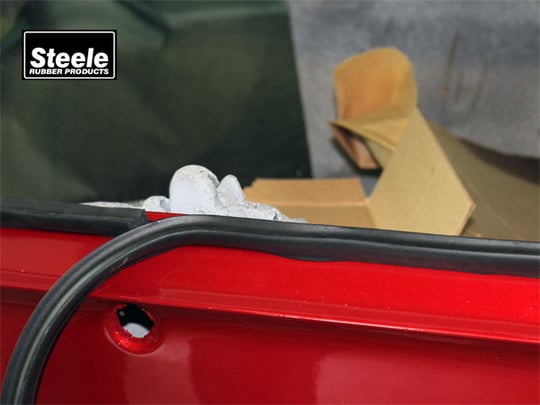
Tip #5 — Close the door and test the seal
Close the door or trunk to test the seal. Closing the door will require some pressure in the beginning while the rubber is new, but for most parts you will be able to check for alignment and other issues. Remember that if you used glue on the part, let it dry before closing the door completely.
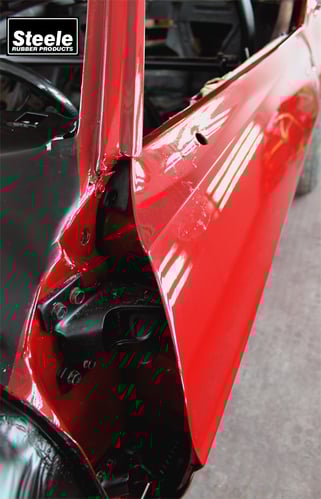
At Steele, we’re more than just high-quality products, we’re your trusted resource for completing your weatherstripping projects with confidence.
Whether you’re working on a classic car or truck, street rod, RV, or boat, our expert team is here to help. If you have questions about weatherstripping or need product guidance, we’re just a call or click away.
📞 Call us at 800-650-4482
📧 Send us an email
💬 Chat with us live on our website
Need installation help?
Check out our How-To video series on YouTube for step-by-step guidance and tips.
Stay connected!
Follow us on Facebook and Instagram for updates, inspiration, and more.
 Steele Rubber Products
Did you find this article helpful? Tell us why!