
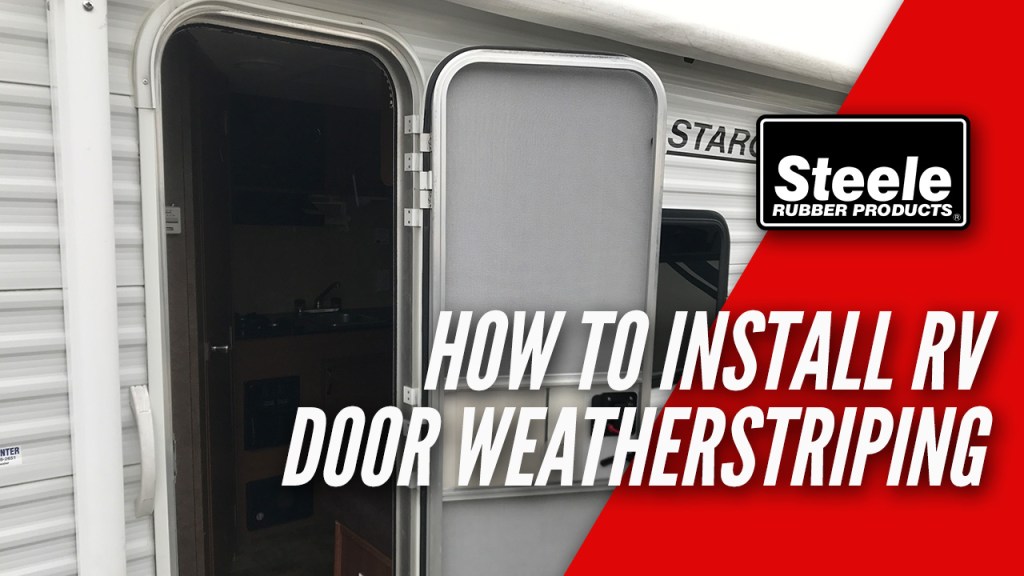
Replacing the old or worn out door seals on your RV may seem intimidating, but it’s actually a simple, DIY-friendly job! While this post, and our how-to video, focuses on RV door weatherstripping, the tools and techniques for replacing other RV seals are similar. The only thing that will change will be the area and the rubber it requires.
RV door weatherstripping not only prevents the intrusion of outdoor elements like rain and pests, but on your access door, it will also help regulate the interior temperature. Let’s get started!
Installation Steps
The tools you will need:
- New RV door weatherstripping
- Adhesive Cleaner
- Scraper/tuck tool
- Rag
- Alcohol Wipes
- Rubber Gloves
There are 4 steps to quick project completion:
- Identifying the new seals
- Removing the old seals
- Cleaning and prepping the work area
- Installing and trimming new seals
Step 1: Identifying the new seals
Take a look at what is already there. Get an idea of the dimensions of your project and the profile of the seal you are looking for. If you’re not sure what seal you have, browse our RV line to find the perfect sealing solution. Get our free RV Catalog mailed to you by filling out this form, or view our digital PDF version here.
Step 2 and 3: Removing the old seals and preparing the work area
Some of the seals used on RVs are made of open cell sponge which does not seal well and rots and deteriorates quickly. For these steps you will need your adhesive cleaner, scraper tool, an old rag, and some gloves.
You should be able to start working your way under the rubber seals with the scraper tool. These types of seals should come off fairly easy. After you have removed all that you can of the seal, apply some adhesive cleaner to your rag. The adhesive cleaner will soften the glue. After letting the adhesive cleaner sit for 1-2 minutes, you can take your scraper tool and scrape away the remaining glue and rubber. Take your time with this step. You will need to remove all glue before moving on.
Once you have a clean and smooth surface, go over the area with an alcohol wipe. The alcohol wipe will ensure that there are no oils from our hands or anything else that would cause the new rubber not to stick.
Step 4: Installing and trimming new seals
For this install, we are using a Peel-N-Stick seal.
A very important step for any weatherstripping install is a test fit! Doing a test fit first ensures the new seal fits and lines up correctly before gluing in place. After your test fit, begin peeling a section of the protective backing and press the seal in place at the beginning of the track area. Leave an extra 1-2″ of rubber at the bottom. This will ensure that you have complete coverage of your entire work area. You can always come back and trim this later.
Focus on 1-2 feet of rubber at a time to maximize your efficiency. This part of the process should go fairly quickly, but be sure to take your time. Try not to peel the rubber off if you’ve already applied it. If the seal is peeled back and re-applied multiple times it can compromise the adhesive bond.
When you get to the end of your project work area, cut off the access (leaving just a little left over). Go back to your left over areas and finely trim the excess. By doing this you are creating coverage of the entire area.
If the seal you have does not have a peel-n-stick backing, check out our video on How to Glue Weatherstrip the Right Way.
Steele not only offers high-quality products, but also the knowledge to help you complete your projects. If you have questions regarding weatherstripping for your classic vehicle, street rod, RV, or boat, don’t hesitate to contact us! Call us at 800-447-0849, send us an email, or chat with us on our website.
*For more help check out our How To series on YouTube!
Don’t forget you can follow us on social media!
Facebook, Instagram and Pinterest
 Steele Rubber Products
Did you find this article helpful? Tell us why!